The fleet
Intercontinental. Cabin crew. Sleeping berths.
Heavy and ultra-long-range aircraft are booked for two reasons: the flight is long enough that the cabin becomes a bedroom, or the group is large enough that nothing smaller works. A cabin attendant is standard, the cabin is genuinely wide, and the longest-legged of them will fly New York to Hong Kong without landing.
What this category is genuinely good at
- Six hours and beyond, including transoceanic
- Twelve to sixteen passengers
- Overnight flights with real beds
- Full cabin service with a dedicated attendant
And where it stops
Runway and cost. A heavy jet burns card hours quickly and cannot use many of the short fields a light jet treats as routine.
- Typical capacity
- 12–16 passengers
- Planning range
- 4,100 nm
- Planning cruise
- 480 kt
6 aircraft
The heavy jets we fly
Every figure below is verified against manufacturer publication or a recognized industry reference, and range is stated with the conditions it assumes.
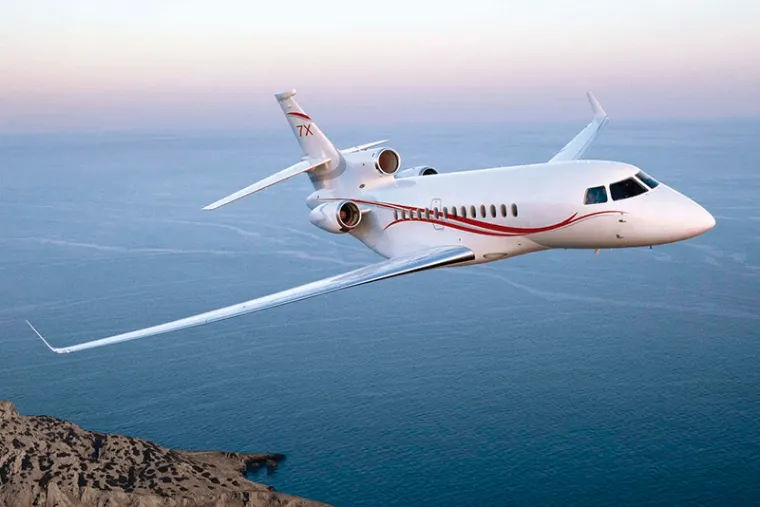
Dassault Falcon 7X
Transatlantic with a full cabin — and, uniquely in this class, steep-approach approval that opens London City and Lugano to a heavy jet.
- Seats
- 13
- Range
- 5,500 nm
- Cruise
- 516 kt
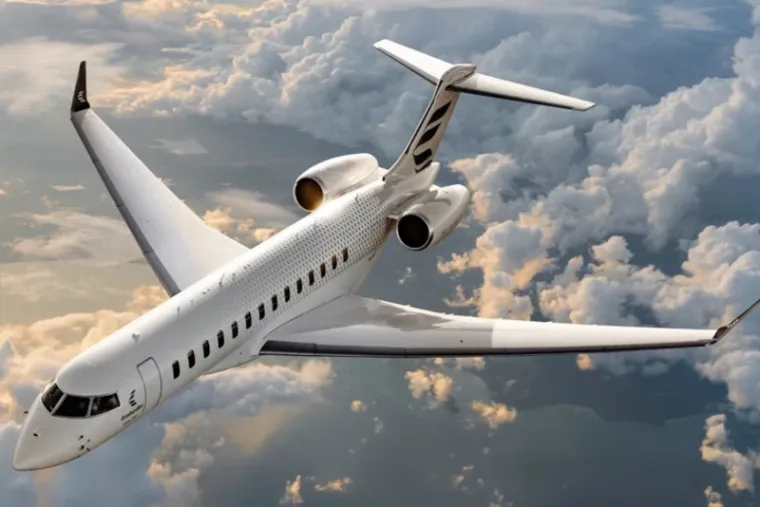
Bombardier Global 7500
The ultra-long-haul flagship — four true living zones including a permanent bedroom, and the range to fly New York to Hong Kong without landing.
- Seats
- 14
- Range
- 7,000 nm
- Cruise
- 516 kt
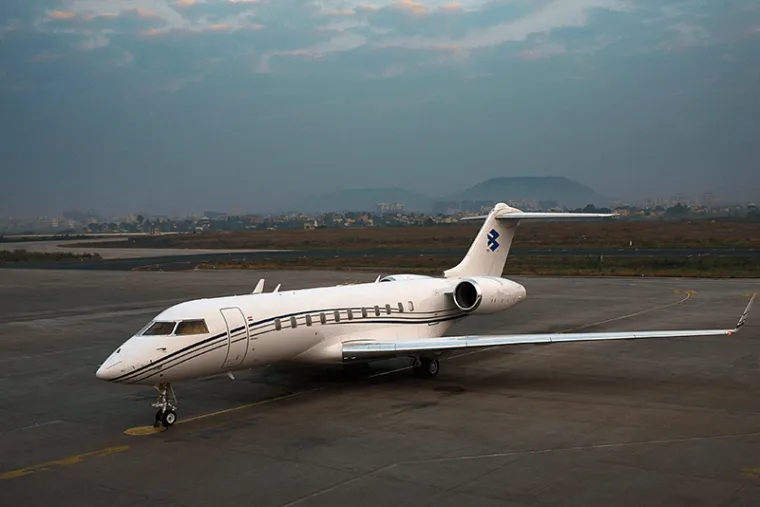
Bombardier Global 5000
Intercontinental range out of short runways — Aspen or London City to the US West Coast nonstop, with the Global cabin experience.
- Seats
- 13
- Range
- 4,900 nm
- Cruise
- 504 kt
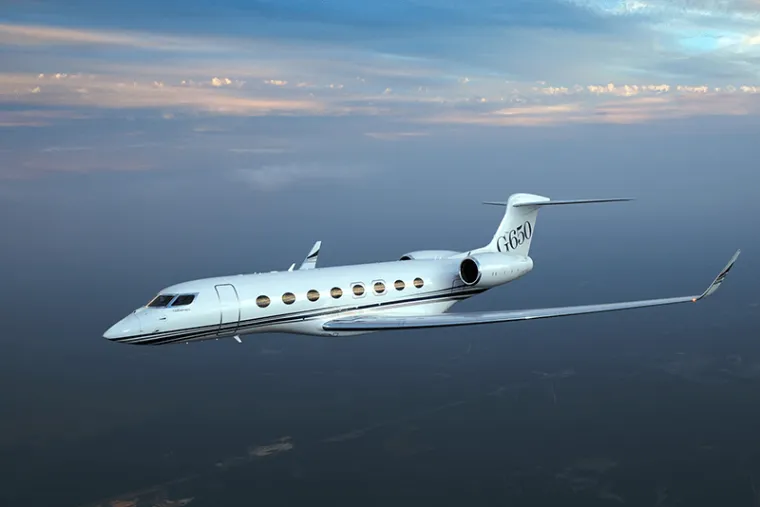
Gulfstream G650
The benchmark ultra-long-range charter aircraft — New York to Tokyo, Los Angeles to London or Dubai to New York nonstop, in the widest cabin Gulfstream builds.
- Seats
- 14
- Range
- 6,500 nm
- Cruise
- 516 kt
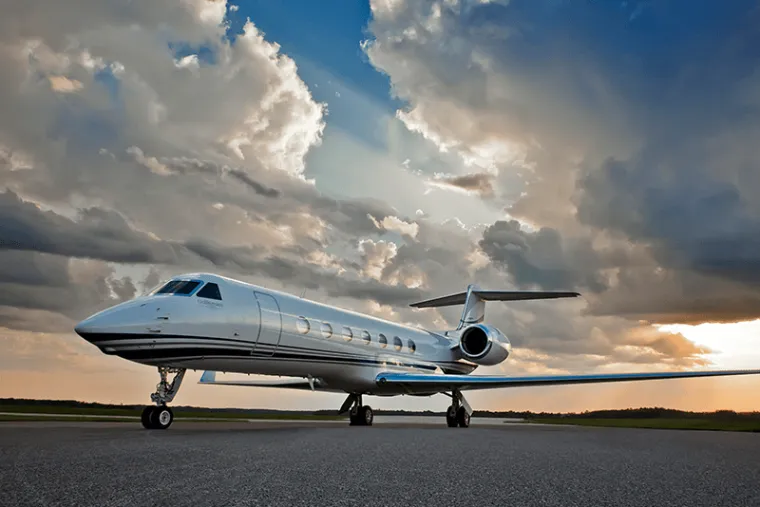
Gulfstream G550
The long-serving intercontinental workhorse — New York to Dubai or London to Los Angeles with fourteen passengers, and the best availability of any aircraft in its class.
- Seats
- 14
- Range
- 6,200 nm
- Cruise
- 488 kt
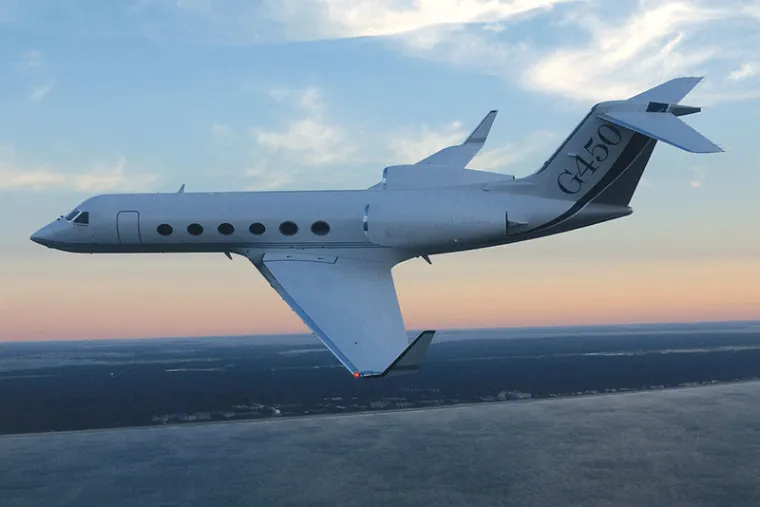
Gulfstream G450
The value heavy jet — comfortable transcontinental flying and marginal transatlantic missions at meaningfully lower rates than a G550.
- Seats
- 13
- Range
- 4,100 nm
- Cruise
- 488 kt
Common questions
How many passengers does a heavy jet carry?
A heavy jet typically carries 12–16 passengers in comfort. Maximum certified capacity is usually higher, but the comfortable number is the one worth planning around — and baggage is often the real constraint before seats are.
How far can a heavy jet fly?
Plan on around 4,100 nautical miles with a full cabin. Manufacturer headline figures are higher because they assume a lightly loaded aircraft at long-range cruise — we publish both and quote against the realistic one.
What is a heavy jet best for?
Heavy and ultra-long-range aircraft are booked for two reasons: the flight is long enough that the cabin becomes a bedroom, or the group is large enough that nothing smaller works. A cabin attendant is standard, the cabin is genuinely wide, and the longest-legged of them will fly New York to Hong Kong without landing.
What is the trade-off with a heavy jet?
Runway and cost. A heavy jet burns card hours quickly and cannot use many of the short fields a light jet treats as routine.
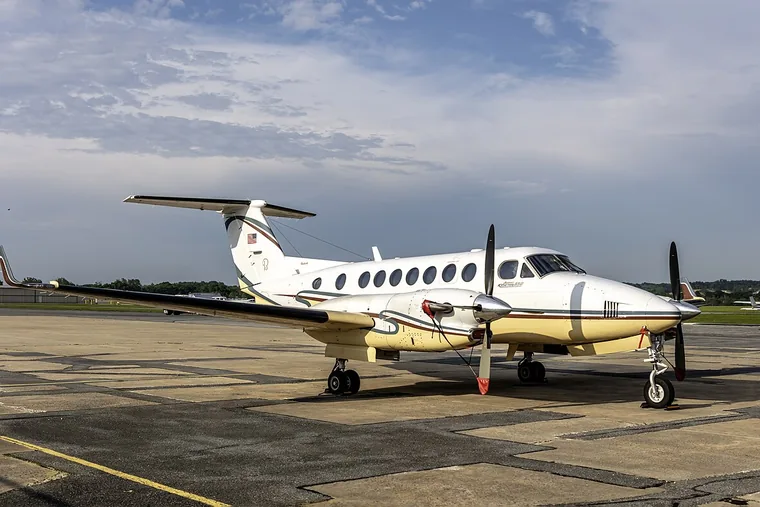
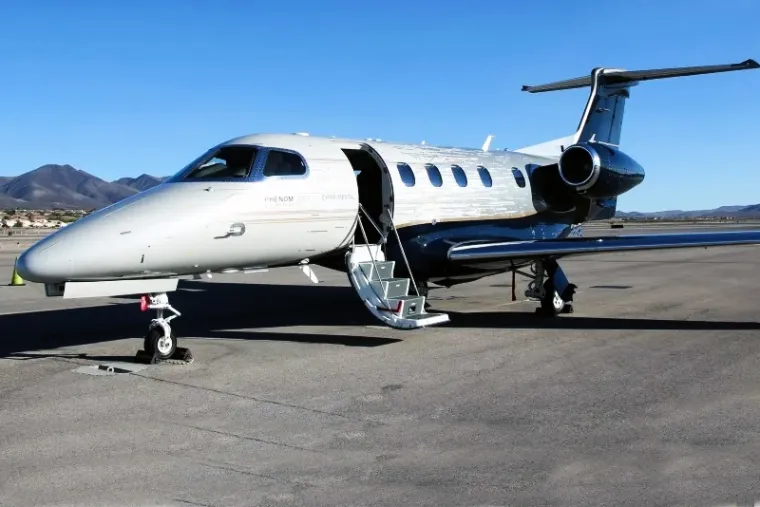
Two ways to fly a heavy jet: the Velocity Jet Card, which fixes your terms in advance, or on-demand charter with no membership at all. Which one suits you depends on how often you fly.
Your Jet Card, priced around the way you actually fly.
No template, no tiers you have to fit yourself into. Tell us how you fly and we will build the program around it.
Every inquiry is answered personally — 24/7, and we come back to you right away.
- Handpicked aircraft
- Highest safety ratings
- FAA Part 135
- NBAA Member